Mussoorie and Landour Weather Month by Month: Temperature, Snow and When to Go
Mussoorie sits 1,400 metres above Dehradun and Landour another 200 metres above that, so the hill's weather is its own story: frost and snow from December to February, the clearest skies in October and November, and a monsoon that drops 600 mm a month. Every month's temperatures and rain from IMD records, plus what to pack and when the valley is the smarter place to sleep.
 Sanchit · Starfish Homestays · · 4 min read
In short
Mussoorie's IMD averages run from 3 to 10°C in January to 16 to 23°C in June, with about 2,000 mm of rain a year, 600 mm of it in July alone. Landour, 200 metres higher, is 1 to 2 degrees colder again and gets snow first. Expect frost from December to February with a few snow days, mostly in January; clear, cold, sharp-view days in October and November; warm, crowded afternoons in May and June; and a monsoon from late June to mid-September that closes viewpoints and sometimes the road. Dehradun, an hour down the hill, is about 8 degrees warmer, which is why many of our guests sleep in the valley and drive up for the day.
Every winter we field the same WhatsApp message from guests planning a Mussoorie day: how cold is it up there, and will there be snow? The honest answer depends on the month, and on whether you mean the Mall Road or Landour, which sits 200 metres higher and feels it. This guide gives the India Meteorological Department's monthly averages for Mussoorie, what they mean for Landour, and when each month is worth the drive. For the valley below, see our Dehradun weather month by month guide; the two are a matched pair.
Three altitudes, three climates
- Dehradun, about 640 metres: a warm valley with mild winters and hot early summers. Our six homes are here.
- Mussoorie, about 2,000 metres: roughly 8 degrees colder than Dehradun in every month, with frost from December to February and a serious monsoon.
- Landour, about 2,200 metres: the quieter cantonment ridge above the Mall, another 1 to 2 degrees colder, with the first snow and the best Himalayan views, from Lal Tibba and the Char Dukan loop.
Mussoorie weather by month (IMD averages)
| Month | Night low | Day high | Rain | Rainy days | What it feels like |
|---|---|---|---|---|---|
| January | 2.8°C | 10.3°C | 50 mm | 4 | Frost, the best snow odds, sharp views |
| February | 3.4°C | 11.2°C | 65 mm | 5 | Cold, late snow chances, clearing |
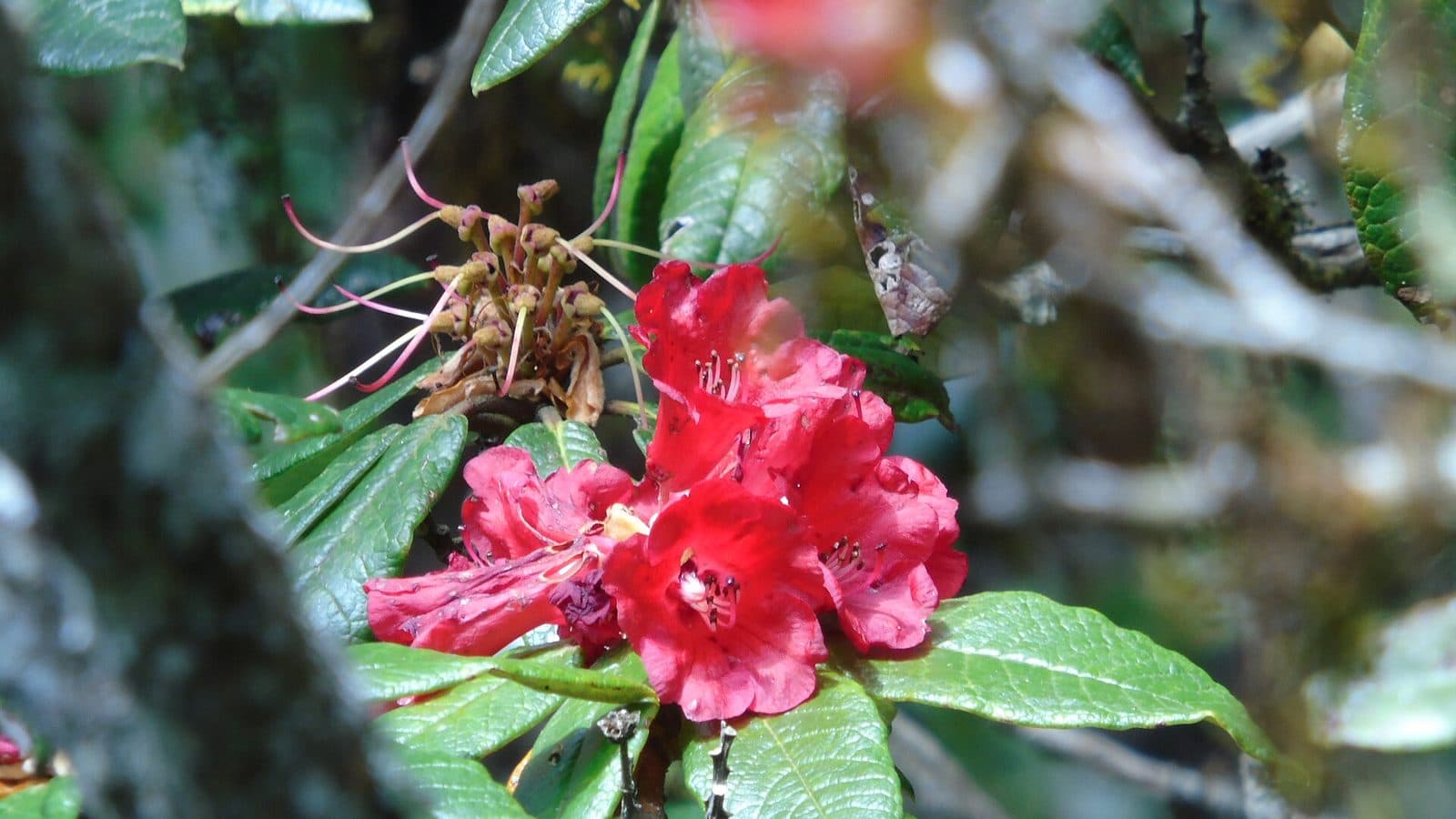
| March | 7.1°C | 15.7°C | 73 mm | 5 | Rhododendrons in bloom, cool and clear |
| April | 11.5°C | 20.6°C | 56 mm | 4 | Pleasant, the first crowds |
| May | 14.3°C | 23.0°C | 69 mm | 5 | Peak season, warm days, cool nights |
| June | 15.6°C | 23.2°C | 201 mm | 10 | Warm, humid, monsoon arrives late month |
| July | 15.0°C | 20.9°C | 630 mm | 22 | Full monsoon, cloud and landslides |
| August | 14.8°C | 20.5°C | 548 mm | 21 | Wet, viewpoints closed by cloud |
| September | 13.6°C | 19.8°C | 265 mm | 12 | Rain easing, greenest month |
| October | 11.1°C | 18.6°C | 56 mm | 3 | Clear, crisp, the finest month |
| November | 7.6°C | 15.5°C | 15 mm | 1 | Dry, cold nights, winterline begins |
| December | 4.5°C | 12.7°C | 10 mm | 1 | Frosty mornings, Christmas crowds |
Source: India Meteorological Department normals for Mussoorie, 1971 to 2000, as published on Wikipedia. Landour runs about 1 to 2°C colder than these figures; Dehradun about 8°C warmer.
Winter: December to February
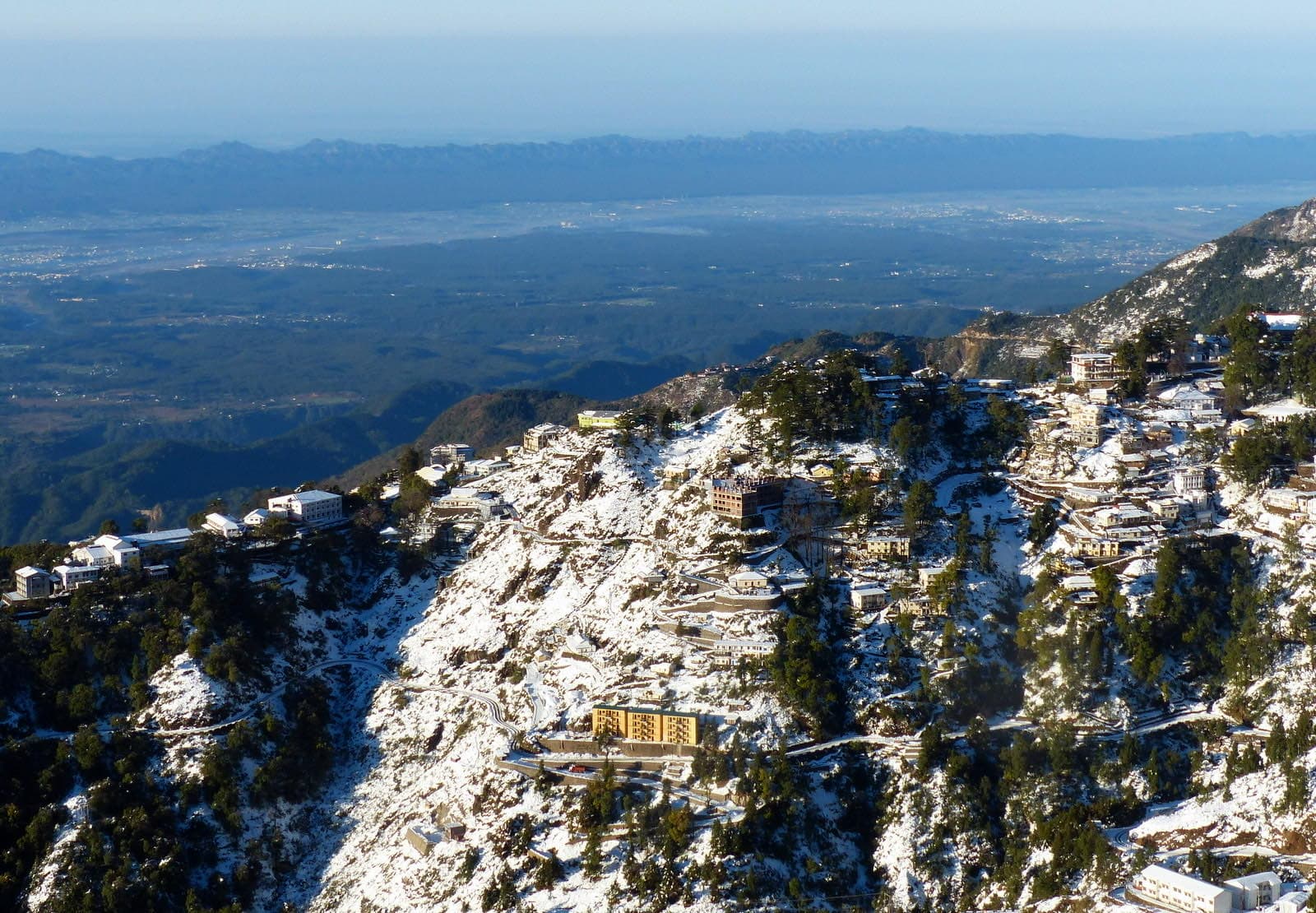
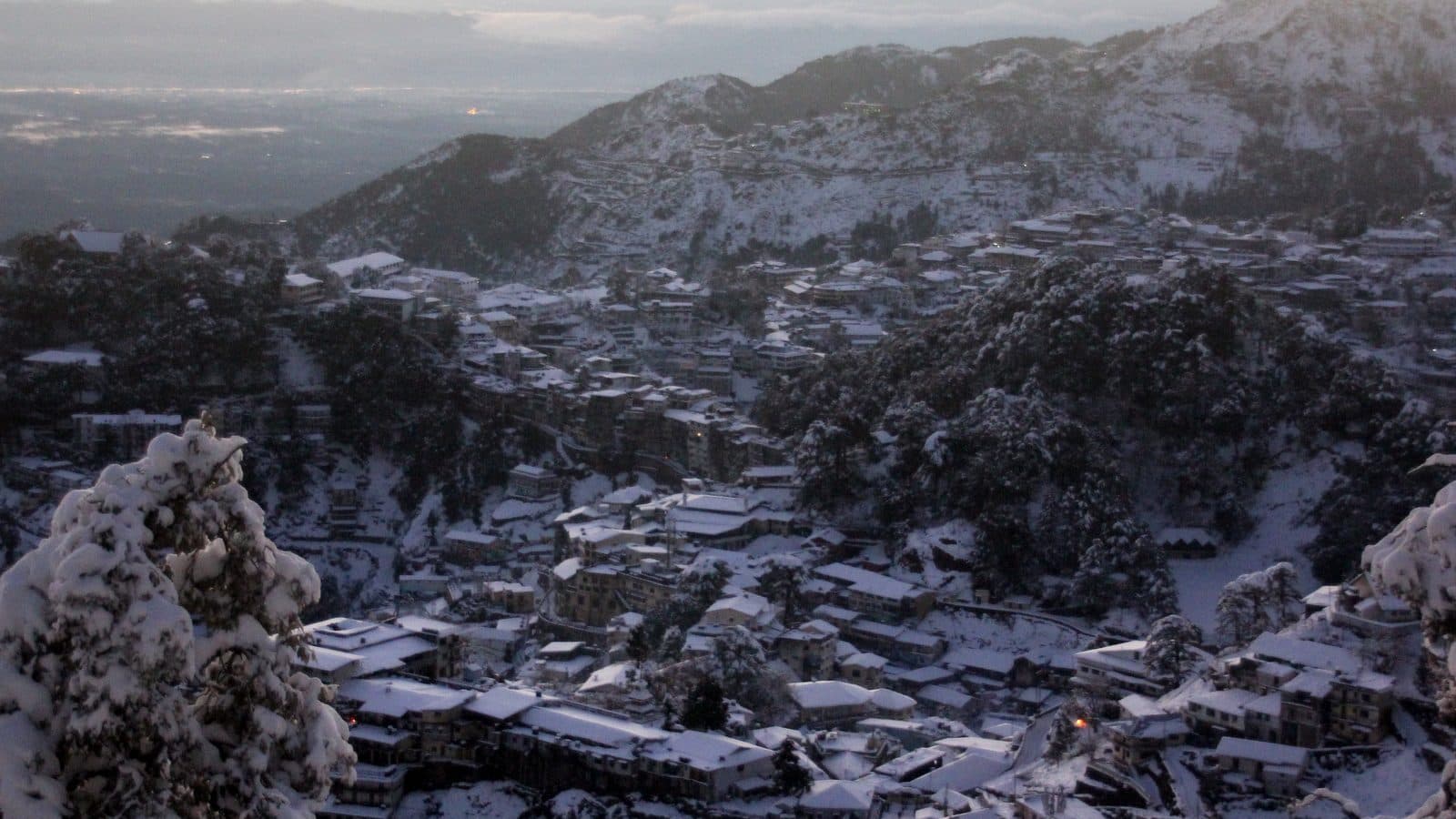
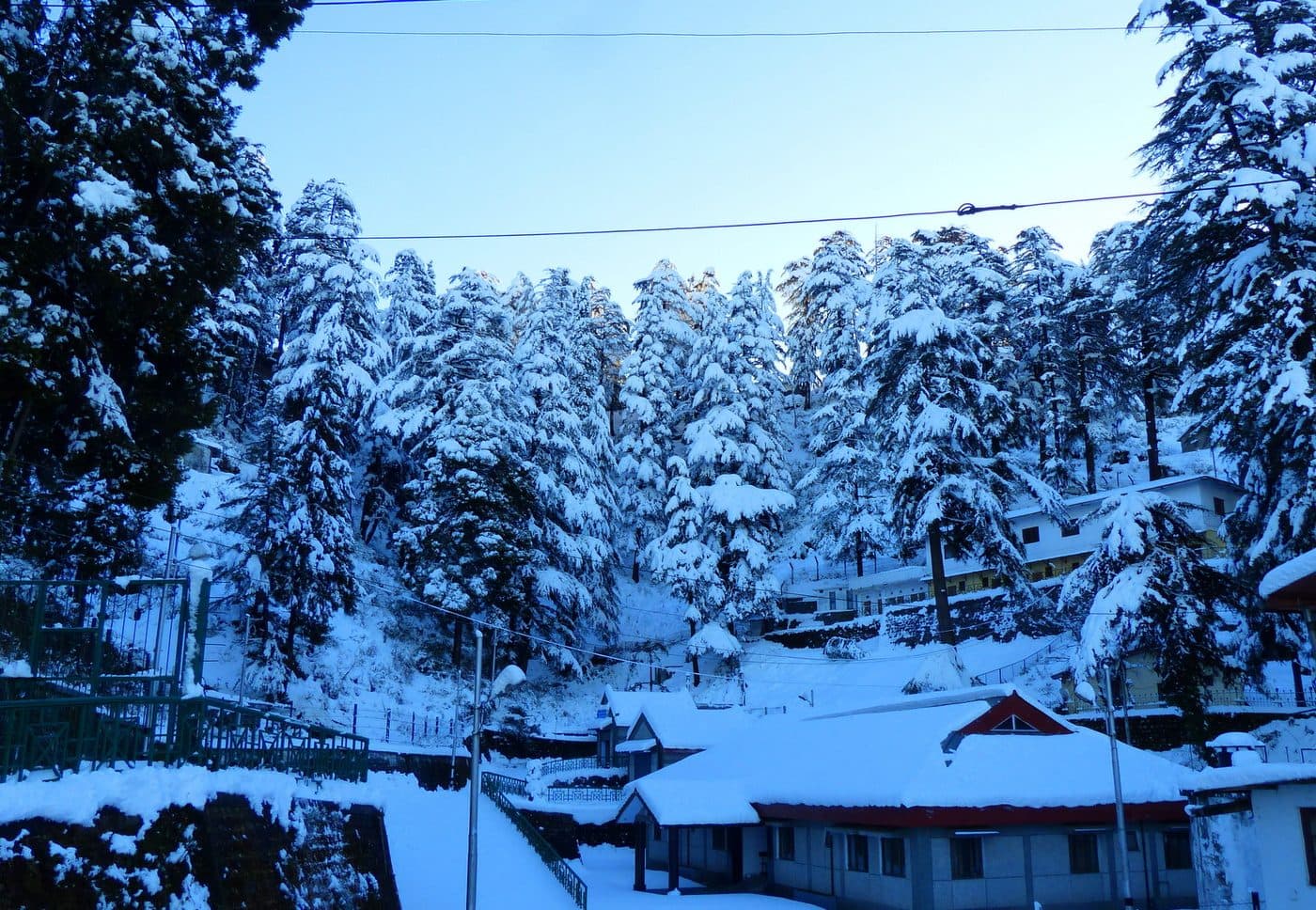
The hill's cold season is short and sharp. Nights sit close to freezing from mid-December to mid-February and the Landour lanes ice over in the shade, but the days are often brilliantly sunny, with the Bandarpunch and Swargarohini peaks standing clear behind the ridge. Snow comes in spells: a western disturbance brings a grey, drizzly day in the valley and one or two days of snow above 2,000 metres, then the sky clears and the Mall melts within a day while Landour and Lal Tibba hold on longer. January gives the best odds, late December and February the next best. Christmas and New Year week is the busiest and priciest fortnight of the year on the ridge; our December guide and January guide cover the dates and the crowds, and Does it snow in Dehradun? explains where the snow line sits.
Spring: March to April
The best-kept secret on the hill. March is cool and clear, the red buransh (rhododendron) flowers along the Landour slopes and the Dhanaulti road, and the crowds have not arrived. April warms to 20°C by day, the schools are still in session, and hotel prices are at their lowest of the dry months. If you want Mussoorie without the queue at Kempty Falls, this is it.
Early summer: May to June
Peak season. Dehradun hits 35°C, Delhi is hotter, and the whole plain drives uphill: Mussoorie's days are 23°C and its nights 15, which is exactly the point. Expect full hotels, the Mall shoulder to shoulder on weekends, and the Mussoorie road jammed from Kuthal Gate on Saturday mornings. Go midweek, start early, and consider sleeping in Dehradun, where our homes with AC are five or six degrees cooler than Delhi and the drive up takes an hour.
Monsoon: late June to mid-September
Mussoorie receives about 2,000 mm of rain a year and 630 mm of it in July alone, more than twice Dehradun's July. Cloud sits on the ridge for days, the Himalayan views vanish, landslides close the Kempty and Dhanaulti roads at short notice, and leeches own the forest trails. It is beautiful in a damp, green way, and very quiet, but it is not the month for views. The valley is wetter than most people expect too; our monsoon guide is honest about it.
Autumn: October to November
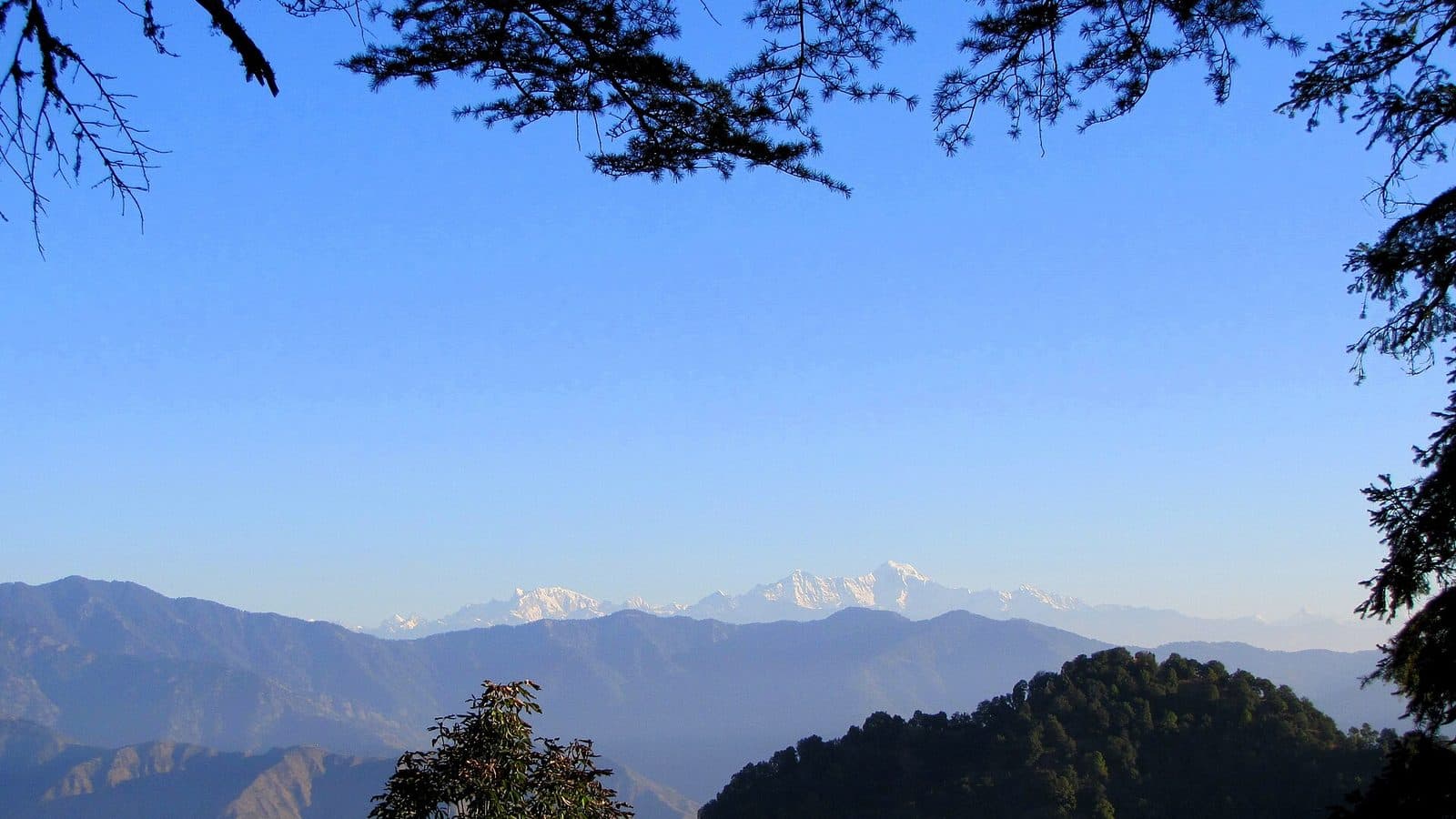
The finest weeks of the year. The rain stops almost overnight in late September, the air dries, and from October the peaks are visible most mornings. October days are 18°C and nights 11; by late November the nights are 7 and the famous winterline, the orange band over the Doon valley at sunset, shows from the Mall and from Lal Tibba on clear evenings. Our winter in Dehradun and Mussoorie guide explains the winterline and the best evenings to catch it.
What to pack, by season
- December to February: thermals, a proper winter jacket, cap, gloves and shoes with grip. The Landour lanes ice over in the shade and the Mall is windy after dark.
- March to April and October to November: a fleece and a windproof layer; sunglasses for the glare; evenings need a jacket.
- May to June: a light jacket for the nights, sunscreen for the days, and patience for the traffic.
- Monsoon: a real raincoat rather than an umbrella, quick-dry shoes, salt or a lighter for leeches, and a flexible plan.
Planning the trip
For the route, timings and what to see on the hill, start with our Mussoorie and Landour day trip guide; for an overnight on the ridge, homestays in Mussoorie is an honest comparison. Check live availability in the valley, then message us on WhatsApp with your dates and we will tell you what the hill is doing that week.
Figures are long-term IMD averages; any given week can run warmer or colder. The [IMD Dehradun page](https://mausam.imd.gov.in/dehradun/) carries the current forecast for the district.
Where to stay for this
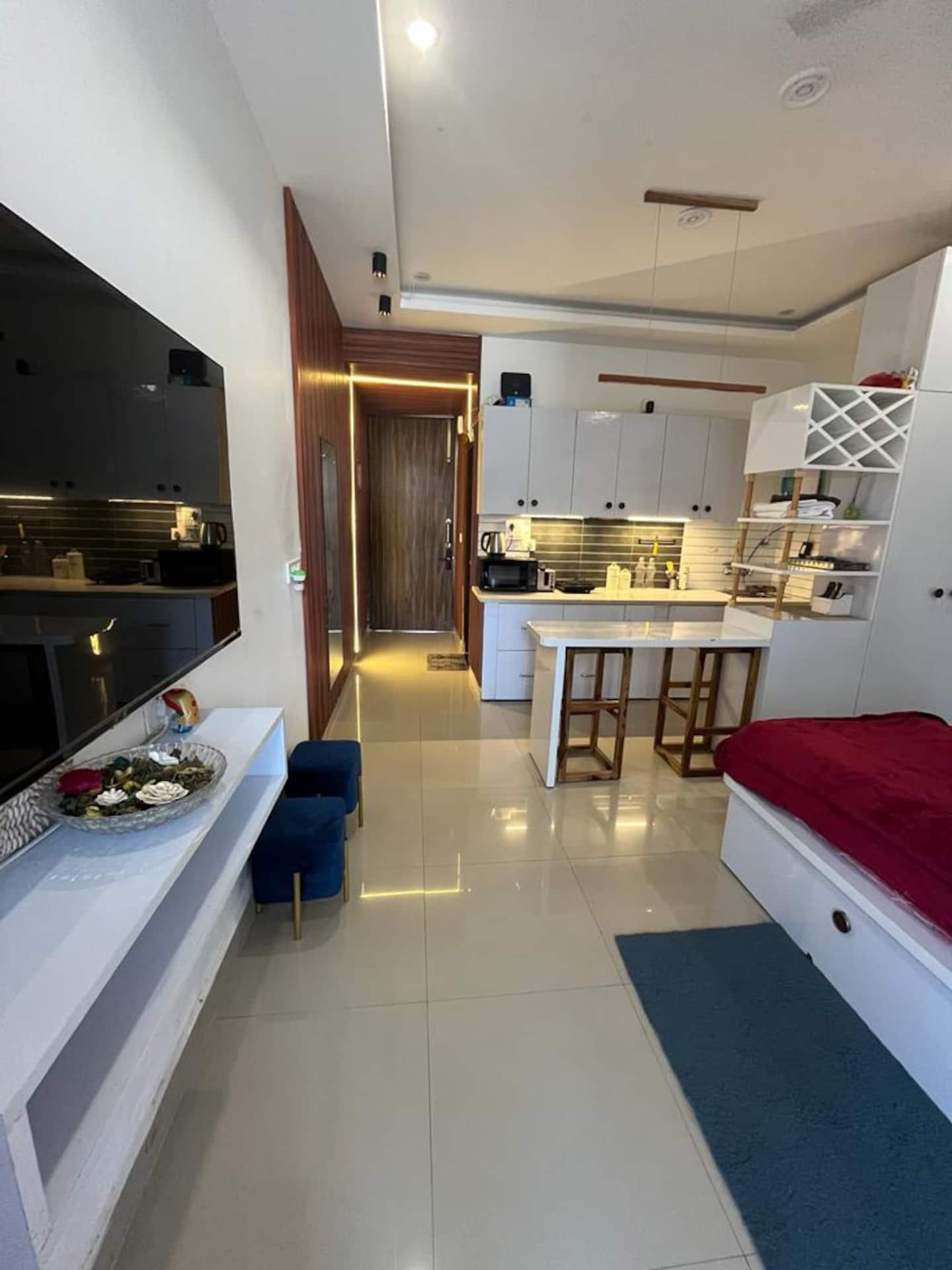
Mountain View Studio
Malsi, Rajpur Road · sleeps 3 · from ₹1,800/night
At Malsi on the Mussoorie Road climb: 45 to 60 minutes to Mall Road in light traffic, hill views from the balcony, and a lift.

Doon Valley 1BHK
Rajpur / Malsi · sleeps 4 · from ₹2,100/night
On Rajpur Road at the foot of the hill, the warmest base for a Mussoorie day trip, and pet-friendly.
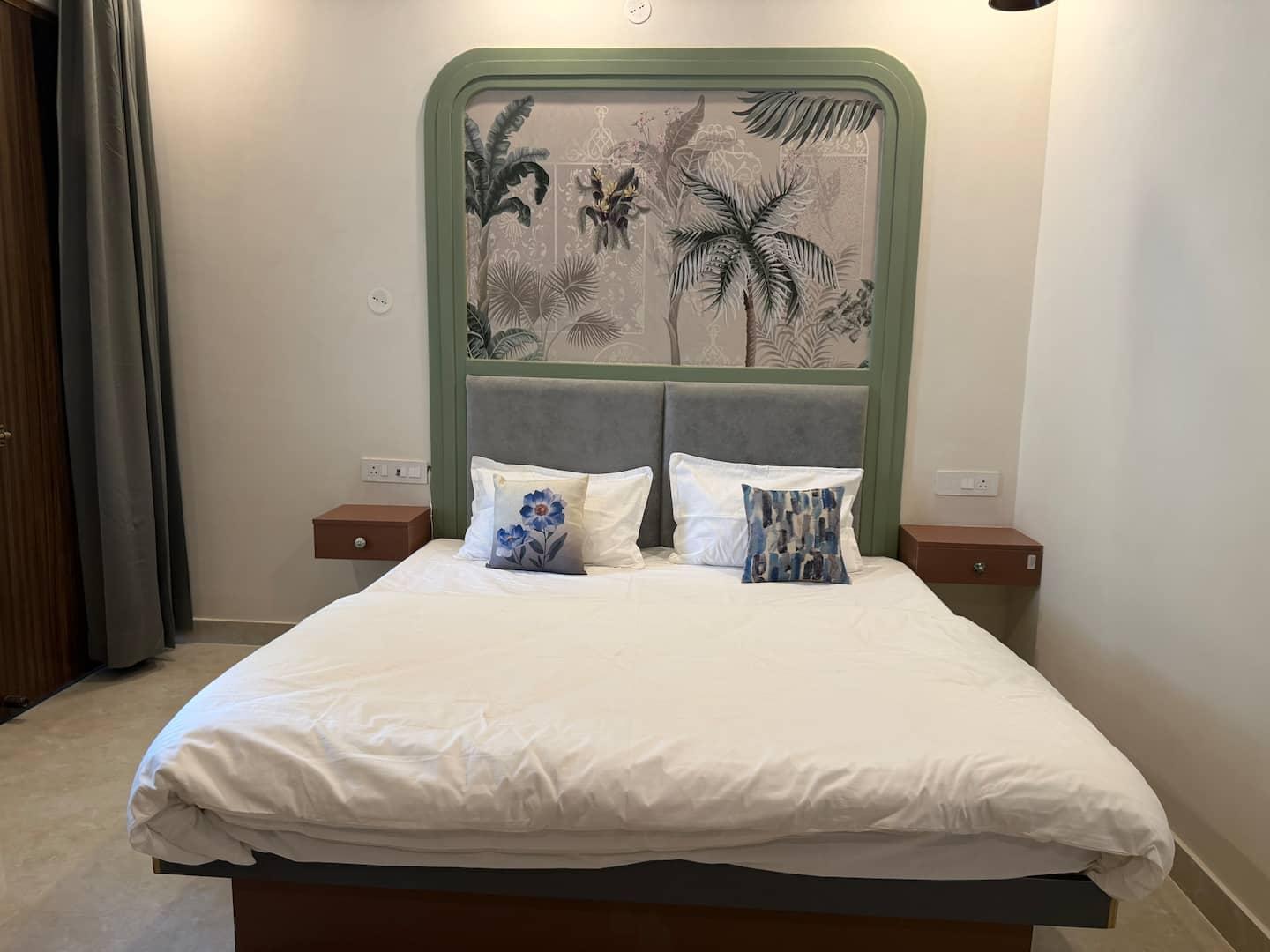
Boho 2BHK
Canal Road · sleeps 4 · from ₹5,100/night
A two-bedroom home on Canal Road for a family that wants a snow day up the hill and a warm valley evening.
Quick answers
- What is the temperature in Landour in December?
- Mussoorie's December average is 4.5°C at night and 12.7°C by day (IMD, 1971 to 2000), and Landour, about 200 metres higher, runs 1 to 2 degrees colder, so expect nights around freezing and frosty mornings. Snow is possible in the last ten days of December but more likely in January.
- Which month does it snow in Mussoorie?
- January is the most likely month, followed by February and late December. A typical winter brings a handful of snow days on the Mall and more at Lal Tibba and Landour, each after a western disturbance passes. Snow rarely lasts more than a day or two on the Mall but holds longer on the Landour side and at Dhanaulti.
- What is the weather in Landour in November?
- Dry and clear, with Mussoorie averaging 7.6°C at night and 15.5°C by day and under 15 mm of rain for the month. Landour is a degree or two colder. It is winterline season: the orange band over the Doon valley at sunset shows from mid-November on most clear evenings.
- Is Mussoorie much colder than Dehradun?
- Yes, by about 8 degrees in every season. On a January day when Dehradun reaches 19°C, Mussoorie manages 10 and Landour 8 or 9. That is why our guests often stay in Dehradun, where the evenings are mild, and drive up in 45 to 75 minutes for the views and the snow.
Written by Sanchit, founder & host at Starfish Homestays
Sanchit lives in Dehradun and runs all six Starfish homes. Every guide in The Doon Journal comes from hosting real guests in the valley and answering their questions on WhatsApp, week after week.
Coming to Dehradun?
Stay with the people who wrote this guide: six hand-styled homestays in Dehradun across Canal Road, Rajpur Road and the Mussoorie climb.
Share this guide on WhatsApp →