Visiting FRI Dehradun: The Complete Guide to India's Grandest Campus
A Greco-Roman colonnade so vast it has its own weather, five forestry museums, and lawns that swallow whole afternoons. Everything to know before visiting the Forest Research Institute, Dehradun's most magnificent building.
 Sanchit · Starfish Homestays · 11 September 2026 · Updated 27 September 2026 · 3 min read
In short
The Forest Research Institute (FRI) is Dehradun's grandest sight: a colossal 1929 Greco-Roman campus on Chakrata Road, about 20-30 minutes from the city centre. Per FRI's official visitor information (checked September 2026), visitors enter in two sessions, 10 a.m. to 1:30 p.m. and 1:30 to 5 p.m., for 100 rupees per Indian visitor at the gate, with the museums 150 rupees extra. Allow two unhurried hours, come as the morning session opens for the light, and check FRI's website for one-off closure notices before a special trip.
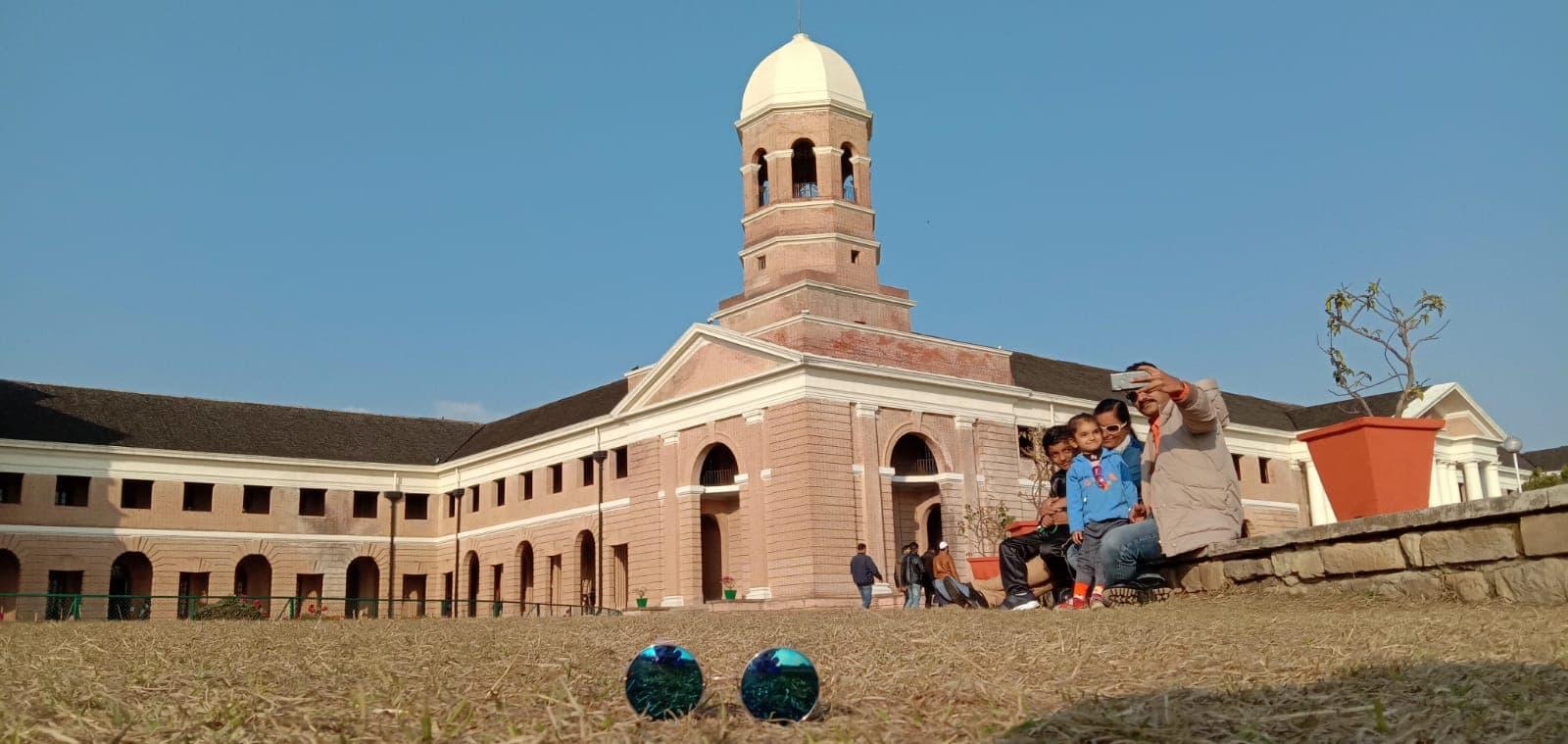
Every city has one building that makes first-time visitors go quiet. Dehradun's stands at the end of a long avenue off Chakrata Road: the Forest Research Institute, a brick-and-colonnade colossus so large its central courtyard could swallow a village green. It tops our 12 best places in Dehradun and it's the first outing we suggest to our guests. Here's the full visiting guide.
A little history (it earns the grandeur)
Forestry research began here in the early 1900s under the British, and the institution grew into one of the oldest of its kind in the world. The present campus, designed in the Greco-Roman manner and inaugurated in 1929, was built to look like what it was: the imperial headquarters of Indian forestry. Today it belongs to India's forest research establishment, doubles as a deemed university, and moonlights as a film set whenever Bollywood needs instant colonial majesty.
What to see
- The main building and colonnades: walk the full front, then find the inner courtyards; the scale keeps revealing itself. Morning light is kindest to the brick.
- The museums: FRI's own site lists five: Pathology, Silviculture, Timber, Non-Wood Forest Products and Entomology. The Timber museum's giant tree cross-sections, ring-dated across centuries, are the crowd favourite.
- The lawns and avenues: vast, shaded and made for slow walks; the Himalayan foothills rise behind the roofline.
- The botanical corners: the campus doubles as an arboretum; tree-spotters can happily burn an extra hour.
Practical notes
- 1.Getting there: FRI sits on Chakrata Road, about 20-30 minutes from the Clock Tower by cab or auto (getting around Dehradun covers the options).
- 2.Tickets: per FRI's official visitor circular (effective 25 May 2026, checked September 2026), gate entry is 100 rupees for Indian visitors and 1,000 for foreign nationals, plus 50 for a scooter, 100 for an auto and 150 for a car or taxi. The museums cost 150 rupees more for Indian adults (1,500 for foreign adults, 30 for school groups, 50 for college groups). The gate fee covers one session; older fees quoted elsewhere online predate this circular. Carry some cash.
- 3.Timing your visit: the circular sets two visitor sessions, 10:00 a.m. to 1:30 p.m. and 1:30 to 5:00 p.m. It gives no separate museum hours and no weekly closed day, but FRI closes to visitors at short notice for convocations, elections and official visits, and posts each notice on its homepage. If in doubt, contact FRI before a special trip. Mornings beat afternoons for light and coolness.
- 4.Photography: the facade is free game and magnificent, and the circular lists no camera fee; tripods and drone flying are a different conversation, so ask at the gate.
- 5.Pair it well: FRI + Robber's Cave and Sahastradhara make the classic full first day, with a Rajpur café landing to finish.
FRI is the anchor of Dehradun's unhurried, green, Raj-inflected charm, the thing that makes the city famous beyond its bakeries and basmati. Base yourself at one of our six homes, give it a slow morning, and let the rest of the valley follow.
Quick answers
- What is FRI Dehradun famous for?
- Its building, above all. It is a monumental colonnaded campus inaugurated in 1929, among the grandest examples of colonial architecture in India, set in vast lawns against the Himalayan foothills. It houses one of the world's oldest forestry research institutions and five museums on India's forests, and its facade has starred in several Bollywood films.
- What are FRI Dehradun's timings and entry fee?
- Per FRI's official visitor information (a circular effective 25 May 2026, checked September 2026), the campus is open to visitors in two sessions, 10:00 a.m. to 1:30 p.m. and 1:30 to 5:00 p.m., and the gate fee is charged per session: 100 rupees for Indian visitors and 1,000 rupees for foreign nationals, plus 50 rupees for a scooter, 100 for an auto and 150 for a car or taxi. Museum entry is extra: 150 rupees for Indian adults, 1,500 for foreign adults, 30 for school groups and 50 for college groups. The circular lists no camera fee and no weekly closed day, but FRI does close to visitors at short notice for events such as convocations, elections and official visits, and posts each notice on its website, so check there before a special trip.
- How much time do you need at FRI?
- Two unhurried hours covers the colonnades, a museum or three and a lawn wander; photographers and architecture lovers happily lose half a day. Mornings are best, with softer light on the brick facade and cooler lawns.
Written by Sanchit, founder & host at Starfish Homestays
Sanchit lives in Dehradun and runs all six Starfish homes. Every guide in The Doon Journal comes from hosting real guests in the valley and answering their questions on WhatsApp, week after week.
Coming to Dehradun?
Stay with the people who wrote this guide: six hand-styled homestays in Dehradun across Canal Road, Rajpur Road and the Mussoorie climb.
Share this guide on WhatsApp →