A Short History of Dehradun: How a Guru's Camp Became the Doon Valley's Capital
From Guru Ram Rai's seventeenth-century dera to Gorkha forts, Raj-era institutions and India's youngest state capital. The story of the valley you're sleeping in.
 Sanchit · Starfish Homestays · 5 May 2026 · Updated 25 August 2026 · 3 min read
In short
Dehradun takes its name from Guru Ram Rai's dera (camp), pitched in the valley in 1676, joined to 'dun', the valley itself. Gorkha rule ended with the British in 1815, the Raj built it into an institution town (FRI, the great schools, later the IMA), and in 2000 it became the capital of the newly created state of Uttarakhand.
Every place name is a compressed story. Dehra-dun unpacks into two words: dera, a camp or dwelling, and dun, the local word for the long valleys that run between the Shivaliks and the Himalaya. The camp in the valley. Whose camp? That's where the story starts.
1676: the Guru pitches camp
In the 1670s, Guru Ram Rai, the charismatic, controversial elder son of the seventh Sikh Guru, travelled into the Doon with his followers and, with the Garhwal king's blessing, settled here. The Darbar Sahib that grew from his dera still stands in the old city, its painted walls and Mughal-style dome among North India's most underrated monuments. The annual Jhanda Mela, held each spring when a towering flagpole is re-dressed by hand, has marked his arrival for over three centuries. It is the city's oldest living tradition.
Gorkhas, treaties and the Company
The valley changed hands the hard way. Gorkha forces swept across Garhwal around 1803, ruling from hill forts until the Anglo-Nepalese War. The decisive local battle came at Nalapani (Khalanga) in 1814, where Balbhadra Kunwar's hugely outnumbered garrison resisted so fiercely that the British later raised a memorial honouring both sides, among the only monuments of its kind. By the 1815 Treaty of Sugauli, the Doon passed to the East India Company, and everything about the valley's next century follows from that signature.
The Raj builds an institution town
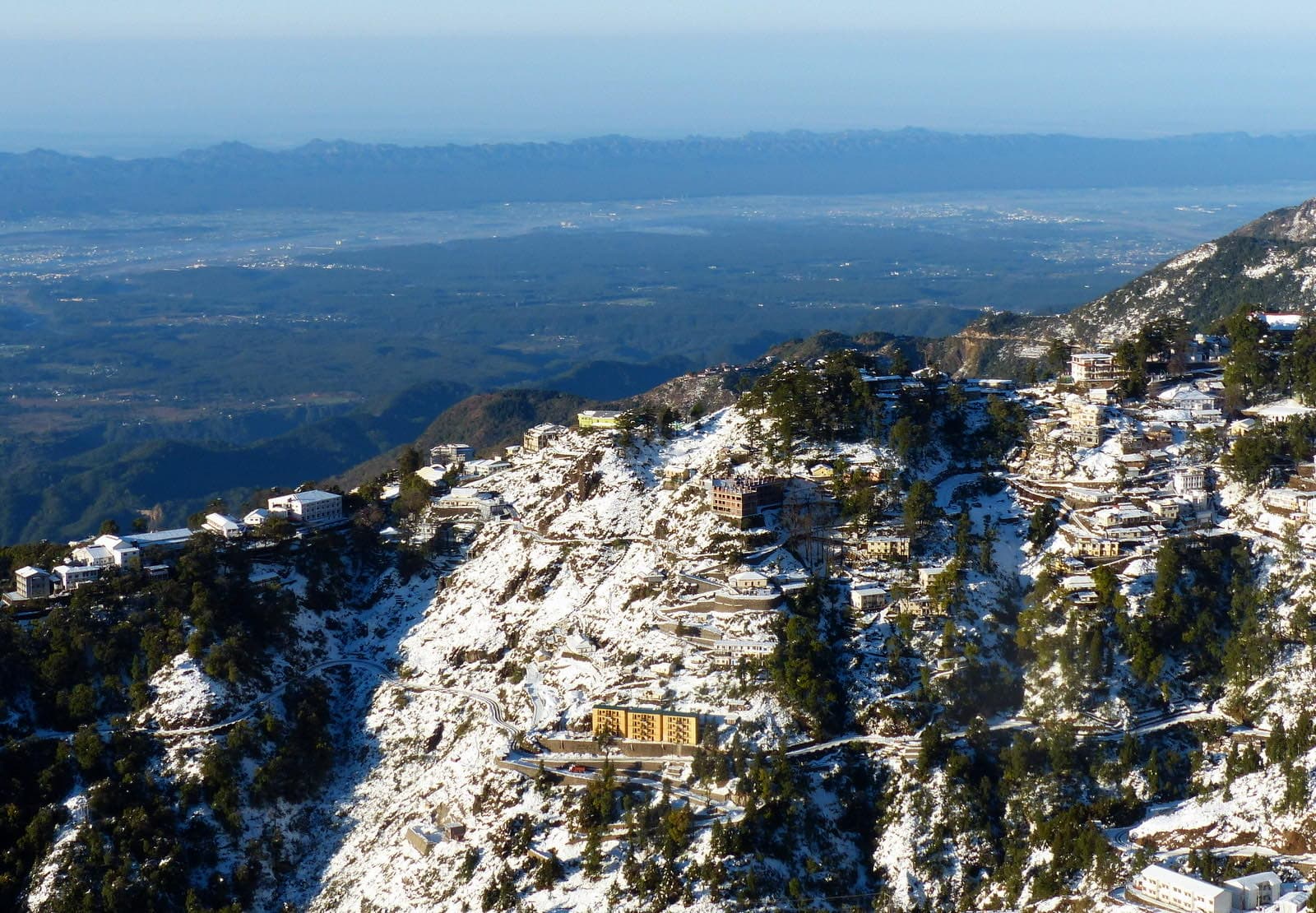
The British found the Doon's climate ideal (cool, green, malaria-light) and planted institutions the way they planted tea. The Survey of India arrived in the 1820s (the Great Trigonometrical Survey that measured Everest was headquartered here; Mount Everest is named for a Surveyor-General who worked from this town). Basmati paddies and tea gardens spread across the valley floor. Mussoorie rose on the ridge above as the summer escape, and in 1900 the railway reached town, stitching Doon to Delhi.
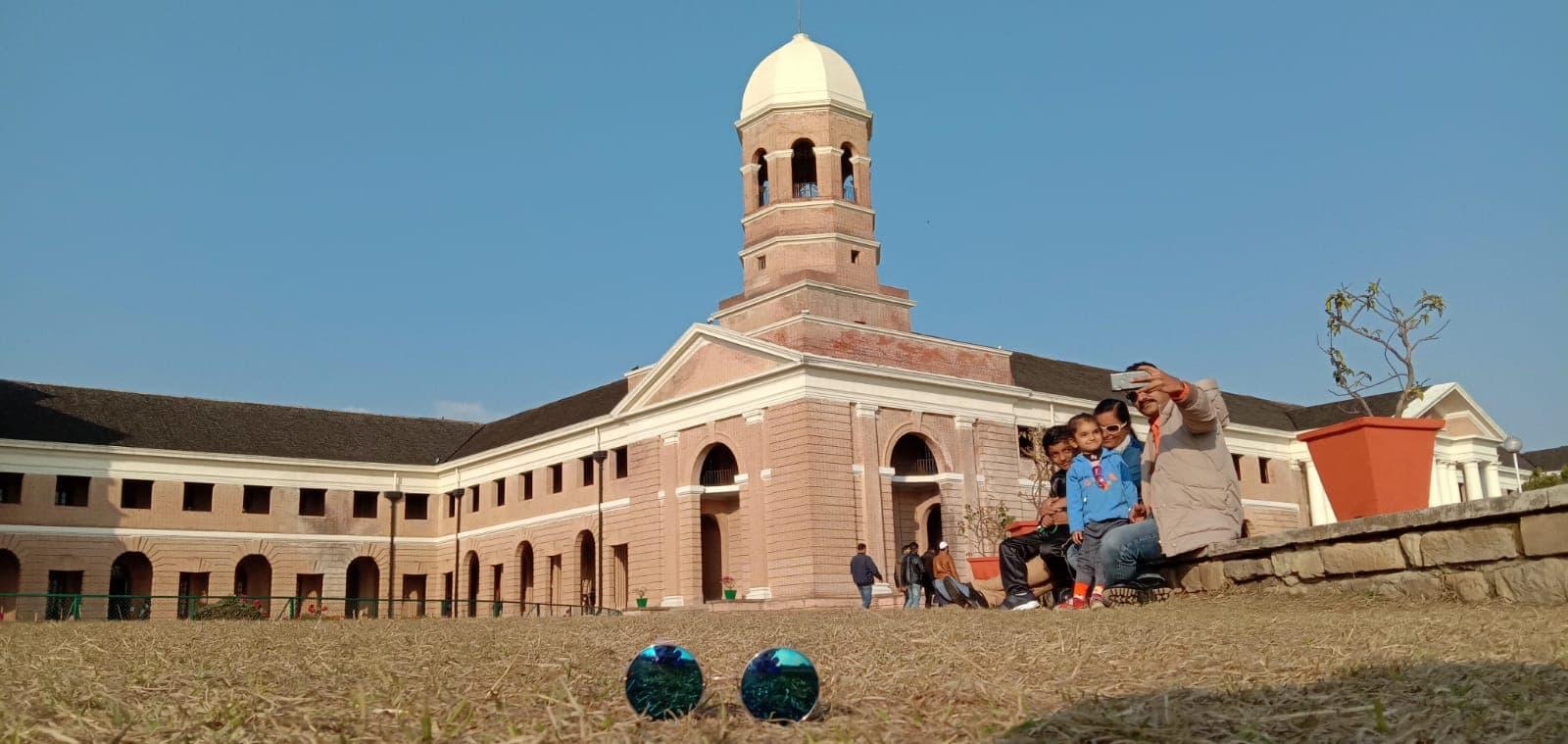
The era's masterpiece came in 1906: the Forest Research Institute, the empire's centre of forestry science, eventually housed in a Greco-Roman palace of brick colonnades that remains the valley's architectural crown. Between the wars came the schools that made "Doon" a byword for education. The Doon School opened in 1935 on a former FRI estate, joining older institutions like St. Joseph's Academy and, on the ridge above, Woodstock.
Independence: scientists, soldiers, oil
Free India doubled down on Doon's institutional character. The Indian Military Academy, founded 1932, became the army's officer cradle; its Passing Out Parades are still the city's proudest mornings. ONGC made Dehradun its headquarters in 1956, bringing oil-and-gas India to the valley. Add the Wadia Institute of Himalayan Geology, the Indira Gandhi National Forest Academy and a constellation of research labs, and you get the city's unusual texture: half cantonment, half campus, all garden.
2000: a state is born
When Uttarakhand (then Uttaranchal) was carved out of Uttar Pradesh in November 2000, Dehradun became its capital, first interim, now winter capital alongside Gairsain. The decades since brought the IT corridors, the café boom on Rajpur Road, and a new generation rediscovering the valley's unhurried charm, including, we'd like to think, the homes we keep in its quietest lanes.
Where to touch the history today
- Darbar Sahib of Guru Ram Rai: the painted seventeenth-century heart of the old city.
- Khalanga War Memorial: the rare monument raised by victors for their opponents (1814).
- Forest Research Institute: the 1906 colonnades and forestry museums.
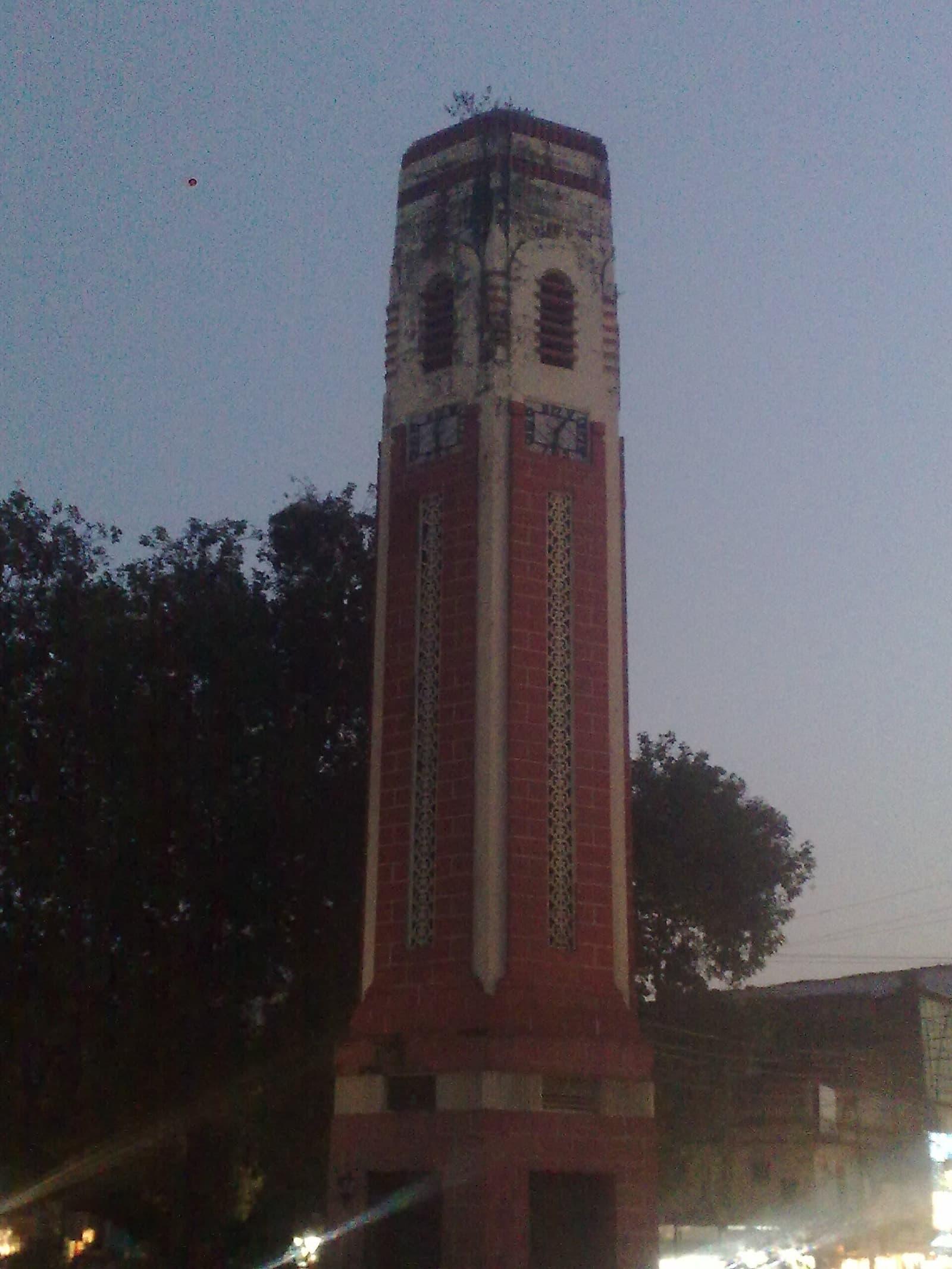
- Ghanta Ghar & Paltan Bazaar: the post-Independence clock tower over the Raj-era bazaar grid.
- Mindrolling Monastery: the 1960s Tibetan resettlement's serene legacy in Clement Town.
Three and a half centuries after a guru pitched camp here, the dera in the dun is still doing what it has always done: taking travellers in and making them feel settled. We're glad to be a small part of that tradition.
Quick answers
- How did Dehradun get its name?
- From 'dera', the camp Guru Ram Rai pitched in the valley in 1676, combined with 'dun', the word for the valley between the Shivaliks and the Himalaya. The Guru's darbar still stands in the old city.
- Who founded Dehradun?
- The city grew around Guru Ram Rai's seventeenth-century dera, but the valley's story runs through Gorkha rule, the British annexation of 1815, and the Raj-era institutions that made it a town of schools, scientists and soldiers.
- Why is Dehradun the capital of Uttarakhand?
- When Uttarakhand was carved out of Uttar Pradesh in 2000, Dehradun, the region's largest and best-connected city with its institutional depth, became the capital, capping three centuries of growth from camp to state capital.
Written by Sanchit, founder & host at Starfish Homestays
Sanchit lives in Dehradun and runs all six Starfish homes. Every guide in The Doon Journal comes from hosting real guests in the valley and answering their questions on WhatsApp, week after week.
Coming to Dehradun?
Stay with the people who wrote this guide: six hand-styled homestays in Dehradun across Canal Road, Rajpur Road and the Mussoorie climb.
Share this guide on WhatsApp →